

What Is Pectin? A Simple Guide to Choosing the Right Pectin
Follow us for more inspiration



Pectin is one of the most important ingredients in fruit-based confectionery and pastry work, yet many people are unsure which type to use and why. If you have ever wondered what pectin is, how it works, or which pectin is best for your recipe, this guide will help.
pectin is a naturally occurring polysaccharide found in the cell walls of fruits and vegetables.
At Savour, we use different types of pectin for different applications because each one behaves differently. Some are ideal for fruit pastes, some can be reheated, and some are designed for cream-based products.
What is pectin used for?
Pectin is used to create structure, consistency and stability in sweet preparations. Depending on the type of pectin, it can be used for:
- jams and jellies
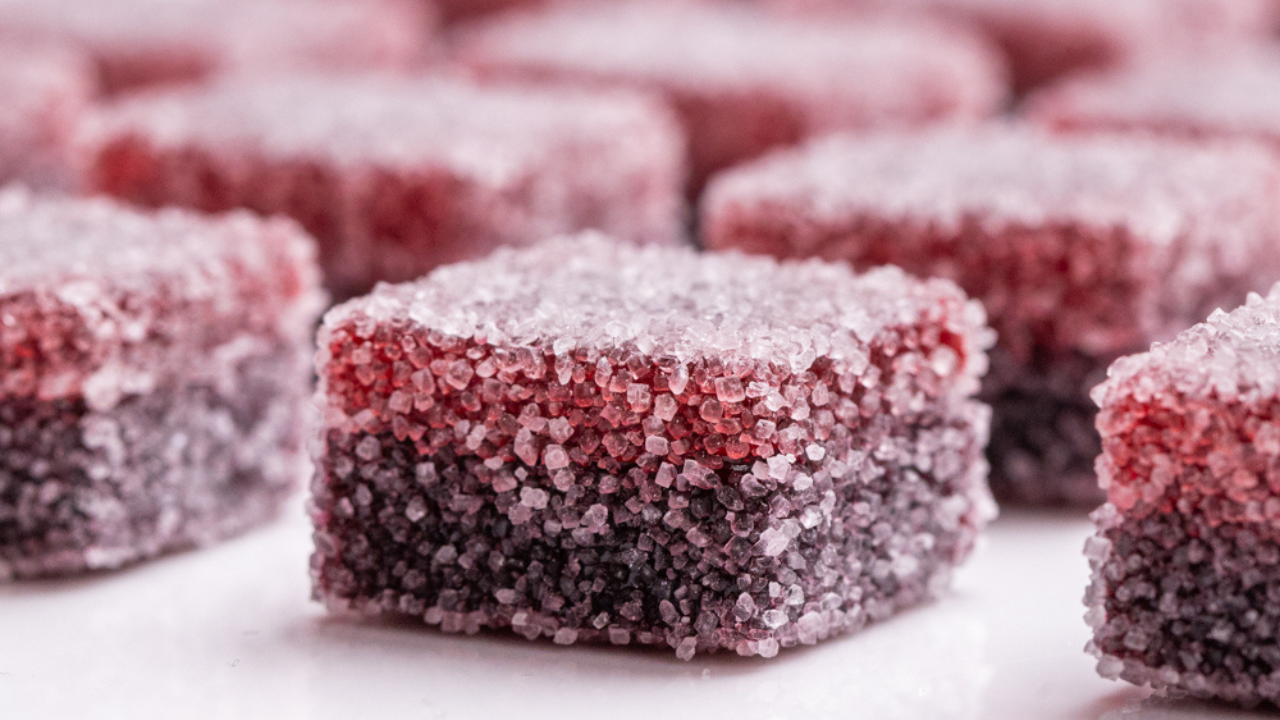
- pâte de fruit
- fruit pastes
- pastry fillings
- fruit-based glazes
- cream-based glazes
- creams and soft set applications
The key to success is choosing the right pectin for the right purpose.
How does pectin work?
Pectin helps mixtures set by forming a gel network under the right conditions. This happens when pectin is combined with heat, sugar and acid. The sugar draws water away from the pectin molecules, allowing them to bond, while the acid helps activate those bonds by reducing the electrical charge that would otherwise keep pectin strands apart. The result is a firmer, more stable texture — whether that’s a glossy jam, a firm fruit paste, or a smooth glaze.
That is why pectin is such a valuable ingredient in professional pastry, confectionery and home baking. It helps deliver the final texture you want, reliably and consistently.
Types of pectin and when to use them
Below is a simple breakdown of Savour’s Pectins and how they are best used.
Pectin Jaune
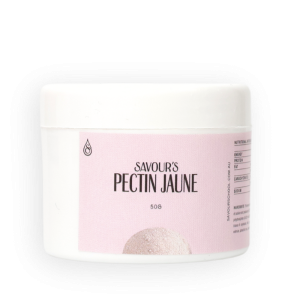
Pectin Jaune is ideal for fruit pastes and solid fillings for pastries. It can also be processed with or without fruit pulp, making it a versatile option for fruit-based applications where a firm set is needed.
This pectin is a strong choice when you want a reliable texture in confectionery and pastry fillings.
Best for:
- fruit pastes
- solid pastry fillings
- pâte de fruit-style applications
We use it in our Raspberry and Blackcurrant Pâte de Fruit class
Shop here
Citrus Pectin
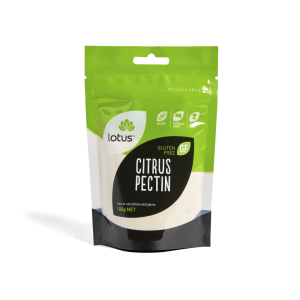
Citrus Pectin is extracted from citrus peel and is ideal for products such as pâte de fruit, jellies and jams. One key point to note is that it can only be heated once, so it is best suited to recipes where reheating is not required.
If you are making classic fruit preparations and want a pectin designed for jam-style and jelly-style results, citrus pectin is a practical option.
Best for:
- pâte de fruit
- jellies
- jams
Key feature: Can only be heated once
We use it in our Cherry, Raspberry and Coconut Bar class
Shop here
Pectin NH
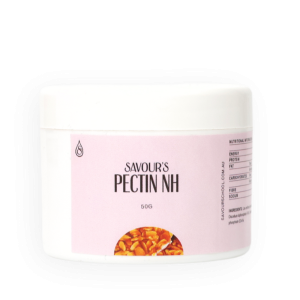
Pectin NH is a highly versatile pectin because it can be reheated without losing its setting ability. It also requires a lower amount of sugar to set, making it useful for recipes where you want more flexibility.
Another major advantage is that it can be used as a setting agent in place of gelatine. This makes it especially helpful for chefs and bakers looking for alternatives in fruit-based or glaze applications.
Best for:
- glazes
- pâte de fruit
- jams with less sugar
Key features:
- thermo-reversible
- can be reheated
- lower sugar required to set
- can replace gelatine as a setting agent
We use it in our Blueberry Cheesecake Chocolates class
Shop here
Pectin X58
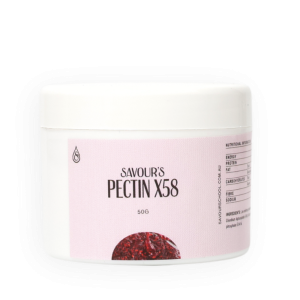
Pectin X58 requires calcium to activate. In most cream-based recipes, the dairy content supplies this naturally, so no additional calcium source is needed. We mostly use Pectin X58 in creams and cream-based glazes, rather than traditional fruit jam applications.
This makes it a more specialised pectin, best suited to pastry and dessert work where dairy or cream-based textures are involved.
Best for:
- creams
- cream-based glazes
Key features:
- thermo-reversible
- activated by calcium in the recipe
We use it in our Mandarin Petit Gateaux class
Shop here
Troubleshooting common pectin problems
Even with the right pectin, a few common mistakes can affect your results:
Pectin not setting: Check that your recipe has the correct ratio of sugar and acid. Too little of either will prevent the gel from forming properly. Also ensure you brought the mixture to the correct temperature — undercooking is the most common cause of a soft set.
Lumpy or clumpy texture: Pectin should always be mixed with a portion of the sugar before being added to the liquid. Adding it directly to hot liquid causes it to clump before it can disperse evenly.
Set too firm: You may have used too much pectin or cooked the mixture too long. With Pectin Jaune in particular, weigh carefully — small variations make a noticeable difference.
Mixture not setting after reheating: If you are using Citrus Pectin, note that it can only be heated once. Reheating will break down its setting ability permanently. Switch to Pectin NH if your recipe requires reheating.
Which pectin should you choose?
Choosing the right pectin depends on the result you want.
If you are making a firm fruit paste or pastry filling, choose Pectin Jaune.
If you are making jams, jellies or pâte de fruit, Citrus Pectin is a great option.
If you need a pectin that can be reheated or want to work with less sugar, Pectin NH is a strong choice.
If you are making cream-based glazes or creams, Pectin X58 is the best fit.
Why learning about pectin matters
Understanding pectin gives you more control in the kitchen. Rather than guessing which product might work, you can choose the pectin that best suits your recipe, your method and your desired texture.
That means:
- better consistency
- fewer recipe failures
- more confidence in confectionery and pastry work
- improved results across jams, jellies, glazes and fillings
Not sure which pectin you need?
Explore the Savour range or start with our Intro into Pectins online class to learn which pectin is right for your next recipe.